
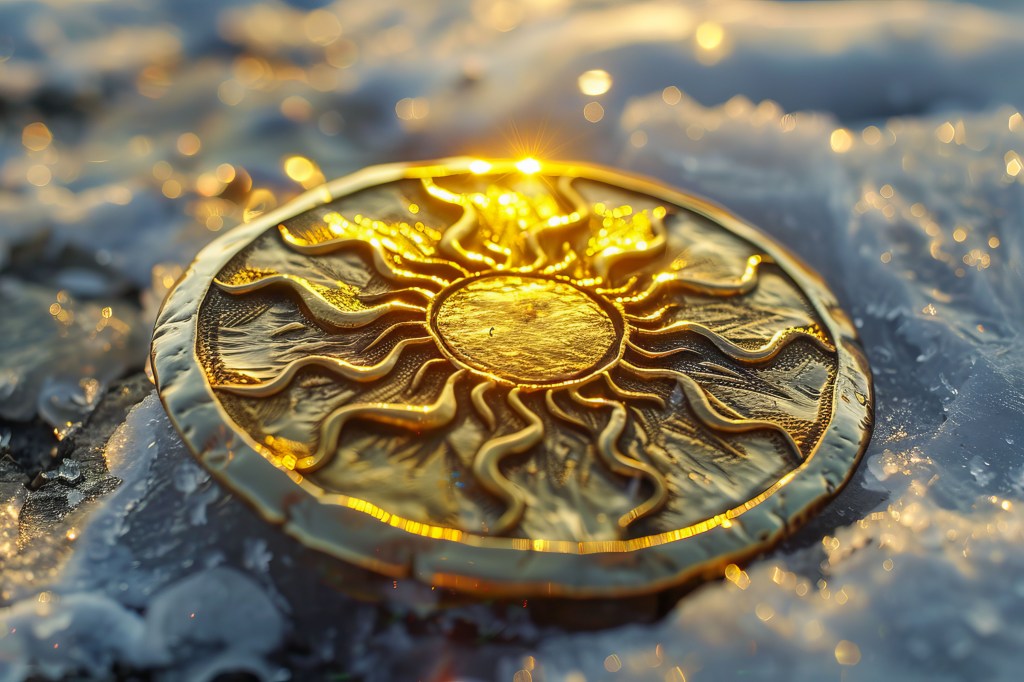

The Winter Solstice has arrived at last!
It marks the longest night of the year. Upon awakening, the Winter Solstice brings dark mornings and shorter days. What does the Winter Solstice mean to you? For me it also brings chilly, frosty mornings and even cooler evenings.
Interestingly, in ancient Celtic times, the Gauls began their new day at sunset. This occurred from around the 2nd to 5th century BC. They did not start it at midnight, as we do today in the Gregorian calendar.
The Celtic calendar originated from the Gaulish Coligny lunisolar calendar. It recognized the months of November through April as the dark half of the year. Weather can be harsh during the Fall and Winter seasons. The next Spring and Summer months, May through October, are designated as the bright half of the year. This distinction is notably significant.
During the dark half-year, we can sometimes feel “frozen” or powerless to find the inertia to move ahead. It makes sense as this is a time of reflection, meditation and hibernation. This is the time we can also find an inner peace for things or circumstances we can’t control.
We can take small steps during Yule and the Winter Solstice. In doing so, we can work slowly and quietly on our plans. We can also contemplate our thoughts that have come to mind for the New Year. In this way, we can plant the small seedlings. They will germinate into the bright half-year. Spring rebounds at that time. It then grows full force into Summer.
Let Nature be Our Guide.
— Kerry
 Kerry Louise Schofield
Leave a comment